How Australia’s Zero Tolerance Driving Laws Punish Medical Cannabis Users
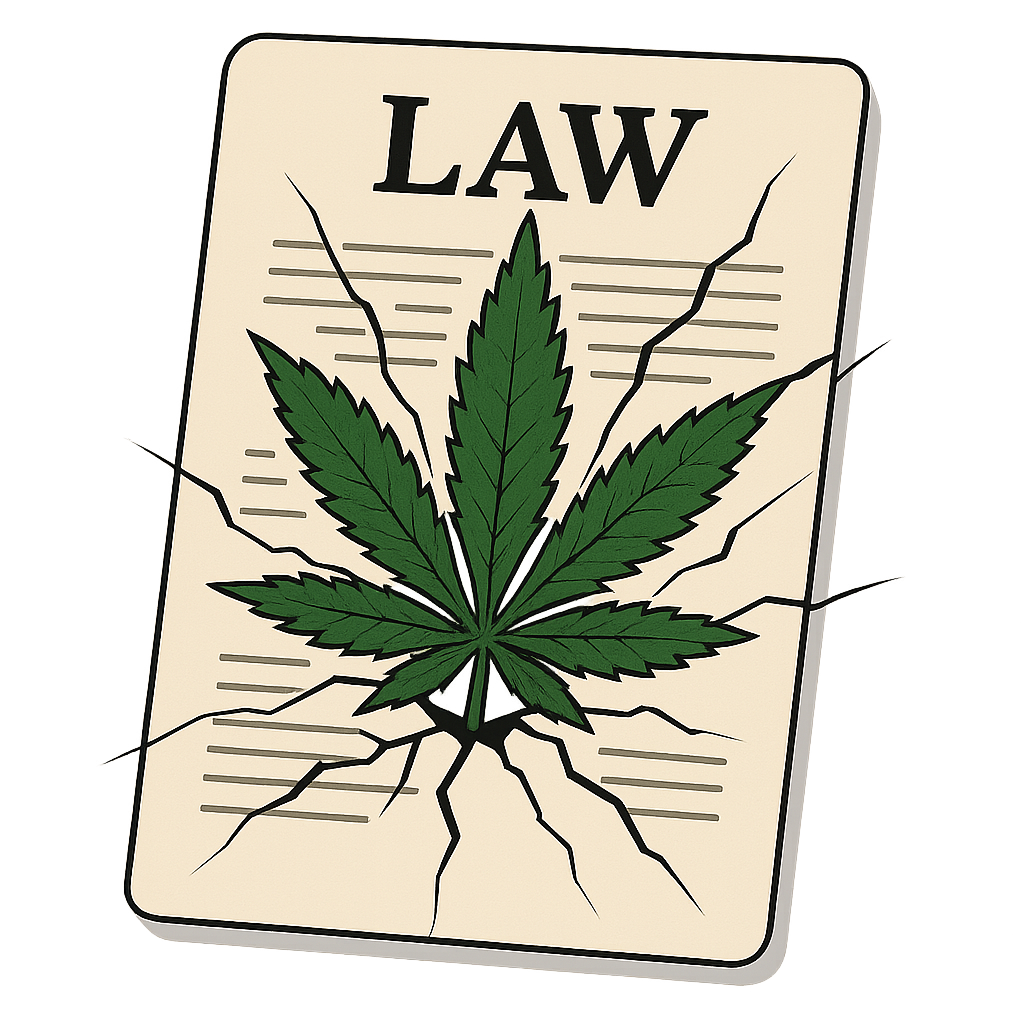
There was a time, not that long ago, when anyone seeking some kind of relief for their mental health or their sleep, and who had found through casual use that marijuana helped in ways they hadn’t expected, had to break the law to keep using it. They risked large fines, a criminal record, and in some cases, a greater chance of imprisonment than they do today.
To continue accessing it, they’d often have to place themselves in the company of people they didn’t necessarily want to be around. Some of those people were disreputable, to put it lightly. Others weren’t. In fact, some were just regular users who happened to share what they had with people they knew. That made them dealers and criminals in the eyes of the law, even if they weren’t pushing it, weren’t upselling harder drugs, and weren’t involved in organised crime. In many ways, those people were a precursor to the medical model we now operate under.
These were the people society labelled as the lowest of the low. And yet today, we pay hundreds of dollars to so-called medical professionals to write a script for the very same drug. We hold these professionals in high regard because they wear lanyards and use the right billing codes.
But what’s actually changed?
The product is now stronger, often far stronger, than what was commonly available in the past. But one of the worst things about the illegal supply was that you never really knew what was in it. It could be mouldy. It could have been stored next to asbestos. It could have been laced with something. That happened to me in my youth. I smoked a joint thinking it was just cannabis and ended up hallucinating terribly. I still don’t know what was in it. That’s what you risk when the supply is unregulated and underground. Legalisation, for all its flaws, brought clarity. It brought consistency. It brought safer choices.
We’ve seen this same dynamic play out with tobacco. I heard recently that there’s now discussion of reducing the tax on cigarettes. Not because the government’s gone soft, but because the illegal tobacco industry is thriving. It’s dangerous. It’s run by organised crime. And it’s a clear example of what happens when you push a substance, flawed but not catastrophic, into a legal framework that drives people toward riskier versions of it. People don’t stop seeking it out. They just stop being protected while they do.
The Responsible Are Treated Like the Reckless
This brings me to this very day.
Responsible people are being treated as if they are reckless and criminal. Upstanding citizens, people who are usually gainfully employed and contributing to society in many ways, are unjustifiably treated as offenders. They risk losing their licence, their jobs, and in some cases, who knows, their families.
The zero-tolerance approach in Australia’s driving laws makes no distinction between someone who uses cannabis medically and responsibly, for example, using it only at night to assist with sleep, and someone who is actually driving stoned, behaving clearly and dangerously.
Both are treated exactly the same. There is no legal differentiation between intention, timing, or risk.
Any approach that leaves no room for nuance will always end up punishing the people who are less equipped to wear the punishment. I explored similar consequences for neurodivergent individuals in Dispatch Two, where systemic rigidity not only failed to accommodate difference, but actively punished it. In that sense, zero tolerance is not just lazy policy. It is a social injustice.
Zero tolerance has no room for complexity. And humans, if we’re anything, are complex.
I often hear it said, “If you’ve met one person with autism, you’ve met one person with autism.” I’d go further. If you’ve met one human, you’ve met one human. Without nuance, we wouldn’t be individuals. We’d be data points. These kinds of approaches leave no room for humanity to exist.
When There’s No Point Doing the Right Thing
When the punishment is the same either way, what motivation is there to do the right thing?
If you’re going to lose your licence whether you wait ten hours or ten minutes, what’s the point of waiting? I don’t make this point to justify people doing the wrong thing. What I’m talking about here is incentives and disincentives.
That’s what zero tolerance does. It sends a message. Your intent, your caution, your judgment, none of it matters. You’ll be punished anyway. And that’s not how you build safer roads. That’s how you build resentment, cynicism, and disengagement from the law itself.
Even those who only use prescribed cannabis occasionally, say, once every few nights to maintain its effectiveness or reduce tolerance, still face the same legal consequences. The law doesn’t account for dose, timing, frequency, or intent. You might be cautious, deliberate, and acting entirely within medical advice, but if you’re tested days later and THC is still present, you’re treated the same as someone who uses it heavily and drives while impaired.
Even the people trying to follow the spirit of the law, using cannabis at night for sleep, never driving while high, testing themselves, being honest with their doctors, get hit with the same penalties as those who couldn’t care less. There’s no distinction. No reward for responsibility.
And that changes people’s behaviour, and not in a good way. It encourages fatalism. It teaches people that if they’re going to get punished no matter what, they might as well just smoke whenever they want and deal with the consequences if they happen.
That’s not harm minimisation. That’s harm deferral.
When you remove the benefit of caution, you remove the point of it too. And in that space, people stop trusting the system, not just the cannabis system, but the law more broadly.
Legal Isn’t the Same as Safer
Let’s say someone is using prescribed cannabis, legally, at night and for sleep. They wake up clear-headed, rested, and ready to work. But if they get behind the wheel and are randomly tested, they can lose their licence. Even if they’re not impaired. Even if they haven’t used it since the night before.
Now let’s say they choose something else. A prescription sleeping pill, such as temazepam (Normison), zolpidem (Stilnox), or zopiclone (Imovane). These are perfectly legal to use. They don’t show up in roadside saliva tests. And unless you’re visibly slurring your speech or driving erratically, you can legally get in the car and go.
But which one is safer?
Medical Cannabis (THC) vs Common Prescription Sleeping Pills
| Feature | Prescription Pills (e.g. temazepam, zolpidem, zopiclone) | Medical Cannabis (THC) |
| Legal to drive after use | Yes, unless visibly impaired | No, detectable THC = offence |
| Detection in roadside tests | Not tested in standard saliva screen | Actively targeted |
| Morning-after effects | Grogginess, slowed response, memory issues | Mild, often none if taken early |
| Dependence risk | High (especially long-term) | Low to moderate |
| Withdrawal risk | High (insomnia, anxiety, rebound symptoms) | Mild (usually just sleep disruption) |
| Overdose potential | Yes, especially mixed with alcohol | None (no known lethal dose) |
| Long-term risks | Cognitive decline, tolerance, rebound insomnia, falls | Possible psychological dependence, minimal physiological damage |
| Approved medical use | Sleep, short-term anxiety | Sleep, pain, anxiety, appetite support |
So, what happens? Some people, fearing roadside tests and licence loss, switch to drugs that are technically legal but more harmful. And they’re praised for making a “safer” choice. The irony is hard to miss.
We’ve created a legal framework that punishes lower-risk treatments and incentivises higher-risk ones, simply because one is easier to detect with a roadside swab.
This isn’t safety policy. It is chemical prejudice, codified in law.
The Pharmaceutical Influence
And then there’s the matter of influence, specifically, pharmaceutical influence.
One report published by CannAus claims that Pfizer, in collaboration with government-funded programs like the National Cannabis Prevention and Information Centre, helped push anti-cannabis messaging under the guise of education, despite increasing global interest in medical applications. According to that report, the Australian Government was spending around $3 million a year to fund this partnership. The goal, it seems, wasn’t open discussion. It was suppression.
Whether or not this shaped long-term policy, it speaks to the broader pattern. Some substances are favoured not because they’re safer, but because they’re already entrenched in the system. They are regulated, funded, and backed by familiar players with familiar lobbyists.
When the System Makes It Worse
Zero tolerance policies are not neutral.
These heavy-handed approaches are often presented as strong political stances, and they rely on a public that isn’t fully informed. They don’t just fail to account for nuance. They create conditions that are less safe, less honest, and more harmful than the very behaviours they claim to deter.
Some people, when faced with the threat of a roadside THC test and the likely loss of their licence, don’t stop using cannabis. They just stop using the legal kind.
Instead, they turn to alternatives that can’t be detected in a roadside saliva test. These include:
- Synthetic cannabinoids like Spice or K2
- Designer drugs that mimic THC’s effects but aren’t picked up in tests
- THC analogues, chemically tweaked compounds that closely resemble THC but are not yet classified as illegal
These substances are easy to access. Some are available on the dark web. Others can be bought through grey market online retailers, sites that operate in legal loopholes by selling “herbal incense,” “research chemicals,” or “not for human consumption” products. They are technically not illegal until a jurisdiction catches up, which often happens after harm has occurred.
These unregulated products have been linked to seizures, psychosis, hospitalisations, and even death.
And yet, under our current system, someone using synthetic cannabis might be less likely to be penalised than a patient using a prescribed THC oil before bed.
As always, the logic is backwards. It punishes the regulated and benefits the invisible.
To be clear:
- The regulated are people who follow the rules, get a prescription, and are traceable, testable, and punishable.
- The invisible are those using synthetic or grey-market alternatives that avoid detection but may be far more dangerous.
This isn’t harm minimisation. It is harm migration. The harm isn’t reduced. It is just pushed out of view, into unregulated, unmonitored spaces where the consequences may never even be recognised.
A bureaucratic system like this doesn’t reduce risk. It relocates it. It moves it into darker corners, where it’s harder to see and far more dangerous when it flares.
Closing Reflection
So where does that leave us?
We’ve built a system that claims to prioritise safety but punishes caution. A system that criminalises responsibility and incentivises invisibility. A system that asks people to do the right thing, then penalises them for doing it.
What began as a public health measure, namely keeping impaired drivers off the road, has morphed into a rigid, automated structure that confuses detection with danger and treats all traces of a substance as equal, regardless of context or risk.
People trying to live well, those following medical advice, using legal prescriptions, and staying off the roads when impaired, are now at the highest risk of punishment. Meanwhile, more harmful and unpredictable alternatives are being driven underground, where they escape detection entirely.
A system like this isn’t broken. It is working exactly as designed.
It is just not designed for nuance. Or fairness. Or truth.
This is what bureaucracy does when left unchecked. It simplifies. It hardens. It protects itself. This echoes the themes in Dispatch One: A Watcher from the Edge, where I first reflected on what happens when compassion is lost in favour of policy enforcement. In doing so, it pushes outliers, all those people whose needs don’t fit neatly into standard categories, into legal and social jeopardy.
For a deeper dive into how these barriers play out across health and work systems, see Dispatch Four.
If public policy is meant to protect people, it must account for how people actually live. Not just in theory. But in practice. In systems. In law. In life.
Until then, we’re not reducing harm. We’re just relocating it.
References and Further Reading
1. Pharmaceutical Influence on Cannabis Policy
- CannAus (2023). How Pfizer Influenced Australian Cannabis Policy for 8 Years with Government Funding.
- ABC News (2023). Cannabis Legislation Reform and Industry Pushback
2. Zero Tolerance and Driving Law Contradictions
- Southern Cross University (2023). Experts call for reforms to medicinal cannabis roadside testing.
- Parliament of Victoria (2022). Inquiry into the Use of Cannabis in Victoria: Final Report
3. Comparative Risks: Cannabis vs Sleeping Pills
- Therapeutic Goods Administration (TGA). Prescription Medicine Information: Temazepam, Zolpidem, and Zopiclone
- National Institute on Drug Abuse (2022). Health Effects of Cannabis and Sleep Medications
4. Risks of Synthetic Cannabinoids and Analogues
- Alcohol and Drug Foundation (2023). Synthetic Cannabinoids.
- Drug Policy Alliance (2022). The Dangers of Unregulated Cannabinoid Substances
☕ If you’ve found something here that resonates, you can support my work:

Pingback: Dispatch Seven: The Measure of Success – Patrick Morris
Pingback: Dispatch Eight: Innovation Without Rivalry – Patrick Morris